
Reviewed work by 実用主義カンパニー · View on DLsite
A university student dies an ordinary death, wakes up in the body of an otome game’s villainess, and gets roughly two years of academy life to dodge the execution the original script has waiting for her. Claire’s Struggle wraps that premise in a calendar-driven raising sim bolted onto an action RPG, starring a heroine who can graduate with her dignity intact — or get quietly pulled apart by a world whose rules she never learned. It’s built for corruption fans who like their falls slow and earned rather than instant, and who are on board with (or at least tolerant of) a gender-bender premise: the heroine was a man before reincarnating.
What works
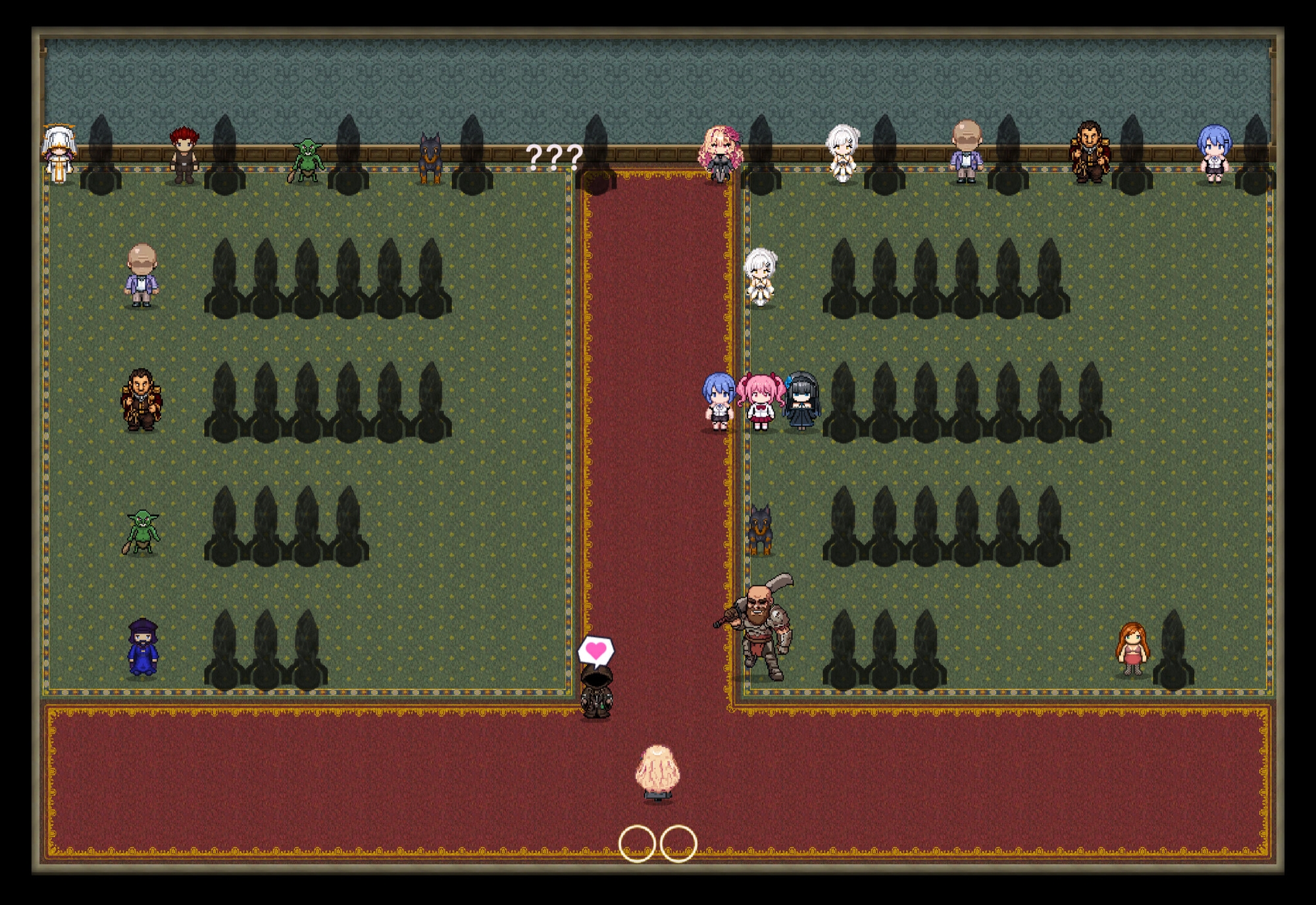
The framing is a familiar isekai trope played with real commitment. The in-universe otome game, Saint Academy, stars an orphanage-raised saint who enrolls at an academy for nobles, charms a cast of handsome men, and eventually defeats an evil god. You are not her. You’re Lucrezia Valerian, the story’s villainess — here going by Claire — whose canonical endings are execution or a political marriage to a fat, middle-aged aristocrat. Avoiding that fate is the whole game, and the structure supports it: roughly two years of academy life on a granular weekly calendar, alternating between a raising part and a combat-driven story part. Classes aren’t flavor — attending them teaches the skills and magic Claire actually uses in battle, so the schedule you set is also the build you’re making. Story events are pinned to specific weeks of specific months, which gives the whole thing the satisfying tick-tock rhythm that good raising sims live on.
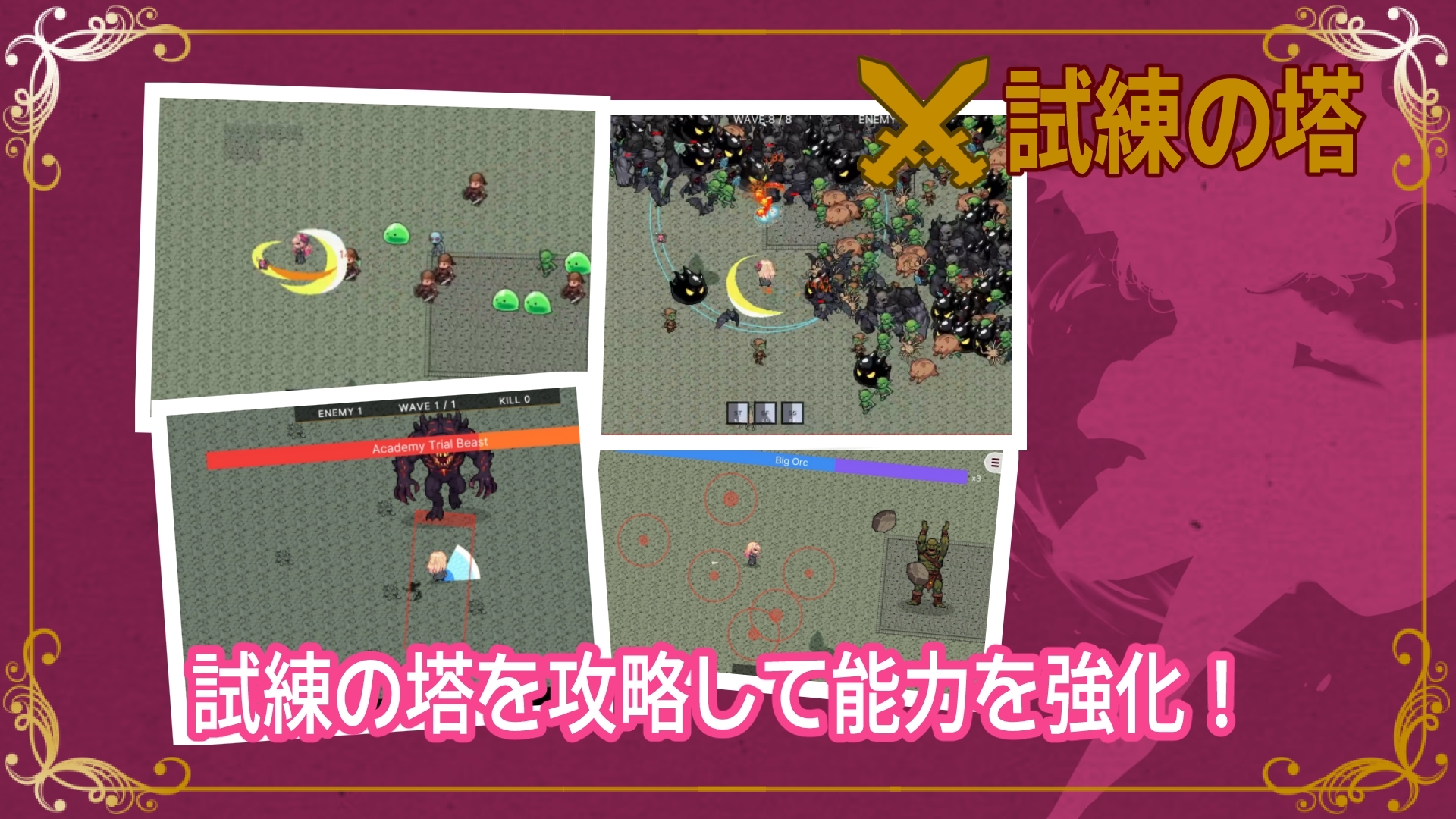
The combat layer has more ambition than the genre usually bothers with. Talking to the fairy Ella opens the Trial Tower, a wave-based battle gauntlet where each floor cleared hands you a bonus ability, and stacking those bonuses into a personal build is the core loop. Combined with class-taught skills, there’s a genuine character-building game here, plus a test-release hard mode for people who want the tower to push back. The branching is real too: patch notes confirm a prince route, scenes triggered by losing story battles, and at least one dedicated bad ending (to goblins, if that tells you where this game’s heart is).

The main event, though, is the corruption writing, and this is where the circle’s track record matters — their previous corruption RPG series about a saint turned vampire was very well received, largely for its prose. Early impressions of this one point the same direction. The hook is baked into the premise: Claire doesn’t know how a noble lady is supposed to behave, so she can’t tell an innocent request from a trap, and the game exploits that mercilessly. Choices that seem harmless compound; by the time something feels wrong, the web is already closed. The content spread is wide — tavern, black market, and slave-merchant scenes, a slime escape event, a multi-scene goblin arc — with pleasure corruption, moral corruption, and interspecies content as the official core tags. It’s voiced, has a music track list, ships with 60+ base CG (human-drawn), and includes a full scene-replay gallery with unlock conditions listed.
What doesn’t

Launch QA was rough, and the version history doesn’t hide it: progression-killing softlocks on the prince route and the slime event, H-scenes that faded to black and never came back, gallery scenes that wouldn’t play, and a bug that deleted your tower builds on save/load. Everything above is fixed as of 1.0.3, which is genuinely responsive patching — but the pattern suggests a game that shipped undercooked, and the new hard mode is explicitly labeled experimental, bug-prone, and incompatible with existing saves. If you’re allergic to being a beta tester, let the version number climb a little first.
There’s also a ledger of divisive elements you should walk in knowing. The TS premise is disclosed upfront, but the promised “TS-off” toggle for people who dislike it is still in development, not shipped. Community tagging goes further than the official genre list, flagging cheating and netorare-adjacent humiliation content, sensory deprivation, and ahegao — if any of those are landmines for you, study the samples before buying. The circle also discloses partial AI use for map assets, backgrounds, and effects (the CG itself is stated to be AI-free), which some buyers will shrug at and others treat as disqualifying. Finally, this is an openly slow burn: the early hours are about building relationships and routine, not delivering scenes, so anyone shopping for quick material will bounce off. The 1280×1080 CG resolution is also on the modest side for a modern release.
Who should buy this
Be clear-eyed about the biggest barrier: the game is Japanese-only, with no official English support. That stings more than usual here, because the thing this circle is best known for — and the thing early players praise — is the writing, and slow psychological corruption is exactly the kind of content that dies in a fog of half-understood text. The raising calendar, tower builds, and combat are mechanical enough to navigate on menu literacy alone, and the CG and scene gallery need no translation. But if you want the story to actually land, plan on a texthooker plus machine translation (assuming the engine cooperates), or enough Japanese reading ability to keep up. If you can’t do either and you mainly want the corruption narrative rather than the game around it, this probably isn’t the purchase for you yet.
Verdict

7 / 10. Claire’s Struggle pairs a well-worn villainess-isekai setup with an unusually complete game — weekly scheduling, class-to-combat skill building, a roguelite-flavored battle tower — and a corruption scenario from a circle with a real reputation for prose, but a buggy launch window, unshipped comfort features, and a language wall standing directly in front of its best asset keep it a strong recommendation for Japanese readers and a conditional one for everyone else.
This is the Japanese-language store. International credit cards and PayPal are accepted. The game itself is in Japanese.
Tip: If the DLsite page opens in Japanese, use the language selector at the top-right of the page (globe icon) to switch to English.