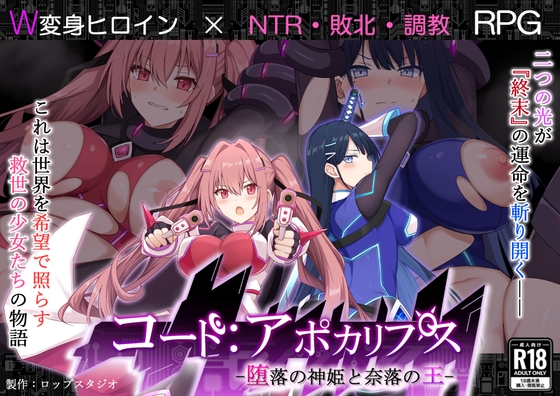
Reviewed work by Aoi Yomimura / Roppu Studio · View on DLsite
Two goddess-warriors known as priestesses lose their war against a resurgent demon king and start sliding, scene by scene, into corruption — that’s the entire premise of this H-focused RPG, and it doesn’t pretend to be anything else. If you want a game engineered around defeat, cuckoldry, and moral collapse rather than a bolted-on side dish, and you’re fine with zero English support, this is built for exactly that itch.
What works
The dual-heroine structure is the headline feature, and it’s clearly the point of the whole release. This circle has previously worked with a single lead heroine, so splitting focus between Terasu (who transforms into the priestess Sonieru) and Tsukiumi (who transforms into the priestess Runakieru) is new territory for them — and rather than thinning out each character’s content to cover two leads, the stated goal was to give both of them a full, expanded route. That shows up in the numbers: roughly 80 subquests, a full menu of unlockable H events and quest logs, and a hidden third route that opens after clearing either heroine’s story, letting you actually switch between both girls and run “together” scenes on top of the solo material from their individual routes.
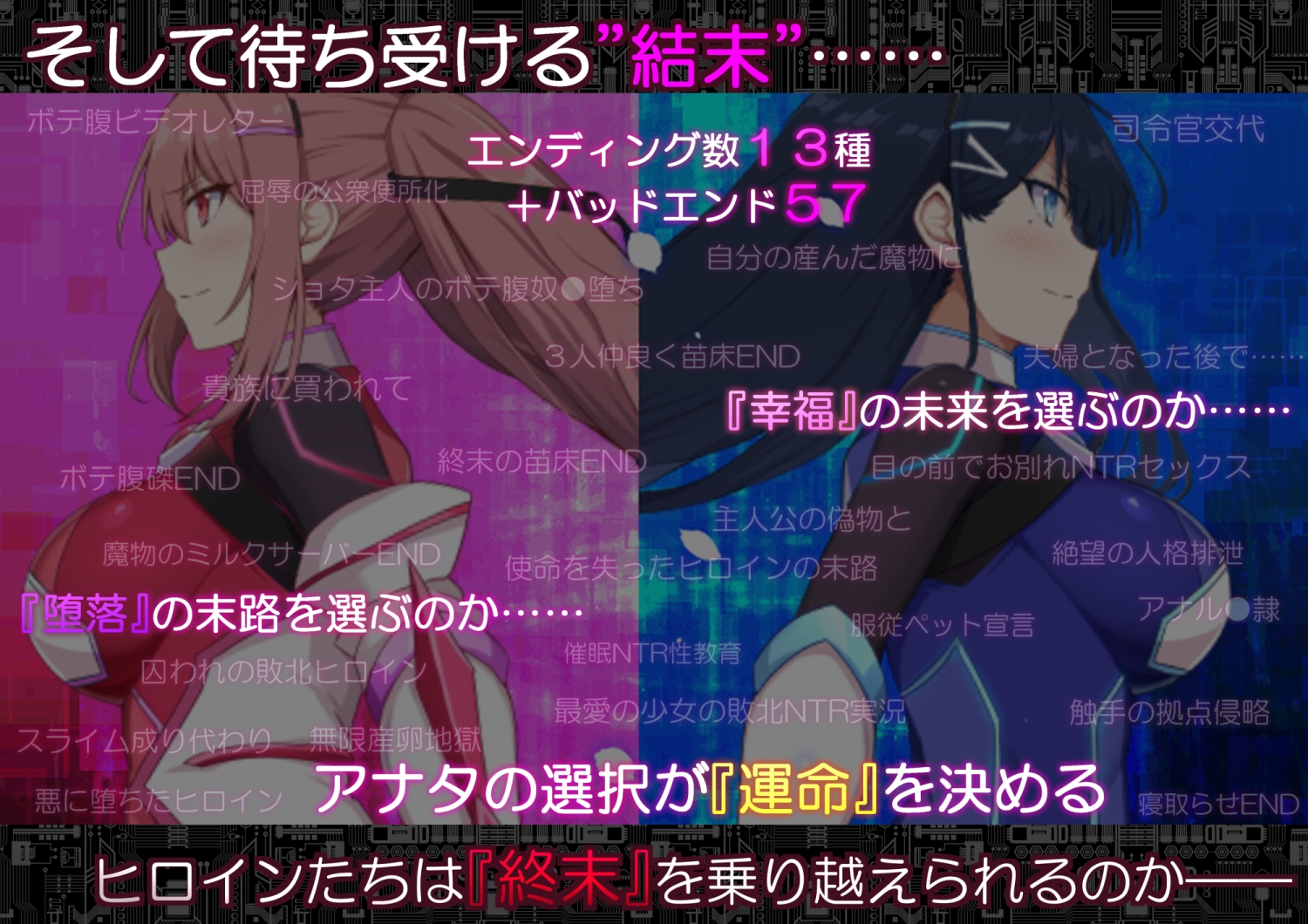
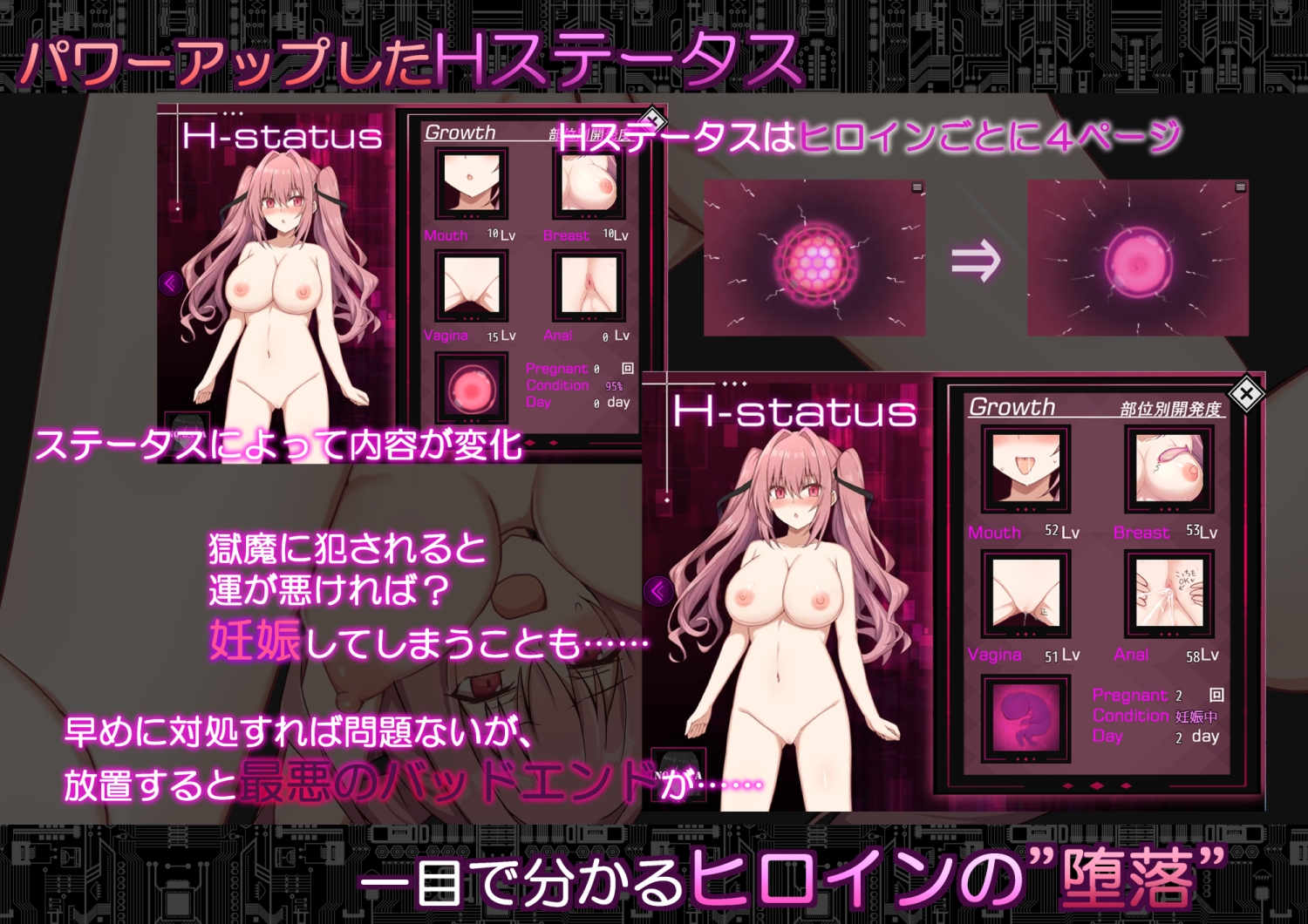
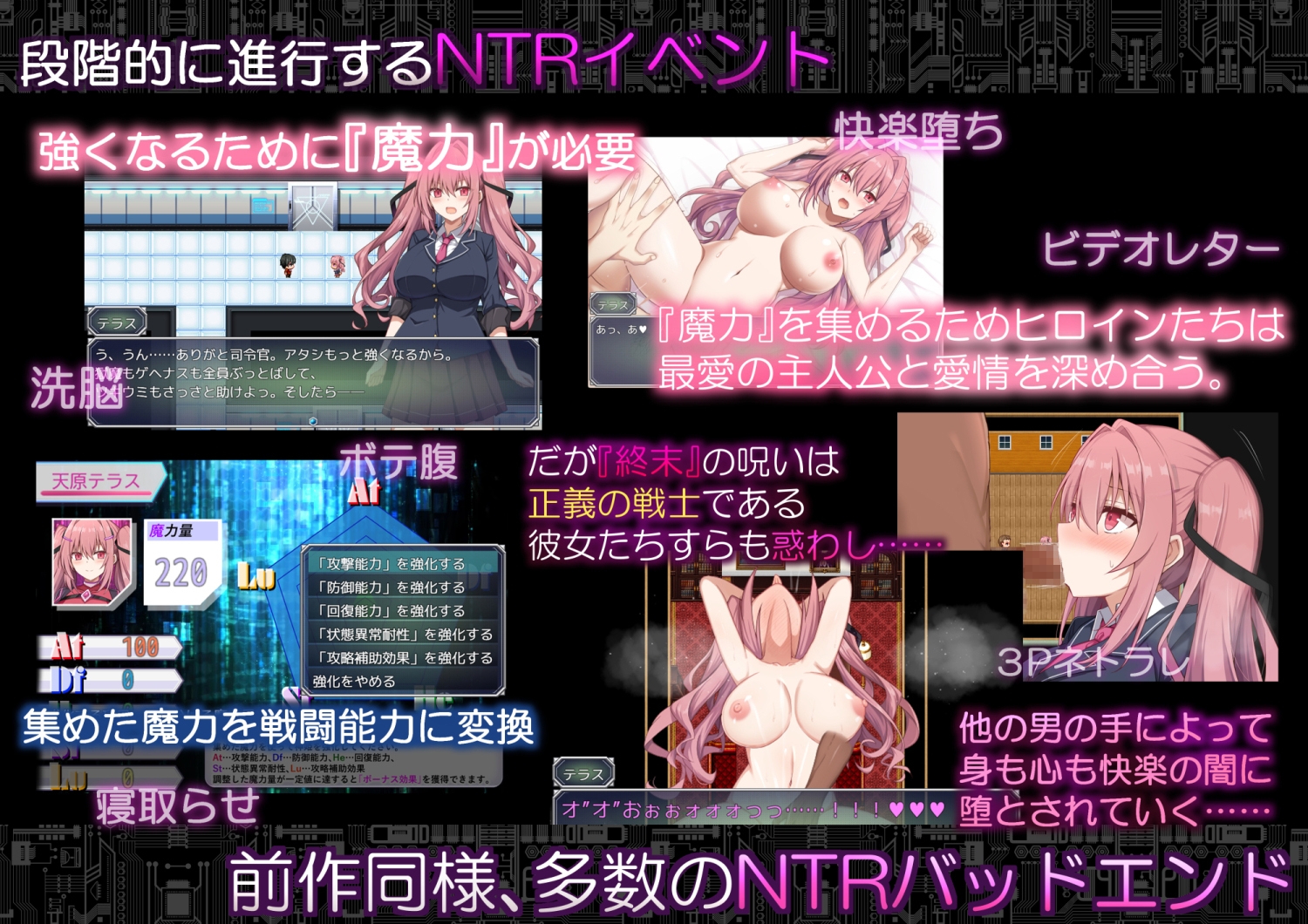
The mana-gathering loop is the smarter piece of design here, because it ties the H content directly into character progression instead of parking it in a gallery. You strengthen your heroine through H events with the commander and by clearing dungeons, or you strengthen the enemy’s grip on her through NTR encounters with rival men and by getting overpowered and violated by the demons hunting her — either path feeds the same power-up currency, which means the corruption content isn’t a detour from the RPG loop, it is the RPG loop. On top of that there are multiple hidden bad endings per route, and the branching goes deeper than most: each story route resolves into a happy, netorare, or “keep fighting together” ending depending on tracked affection versus corruption, the unlocked third route has its own three endings, and there’s an additional bonus ending tied to teaming up with one of the antagonist-side characters. That’s a genuinely dense amount of replay value for a corruption-RPG.
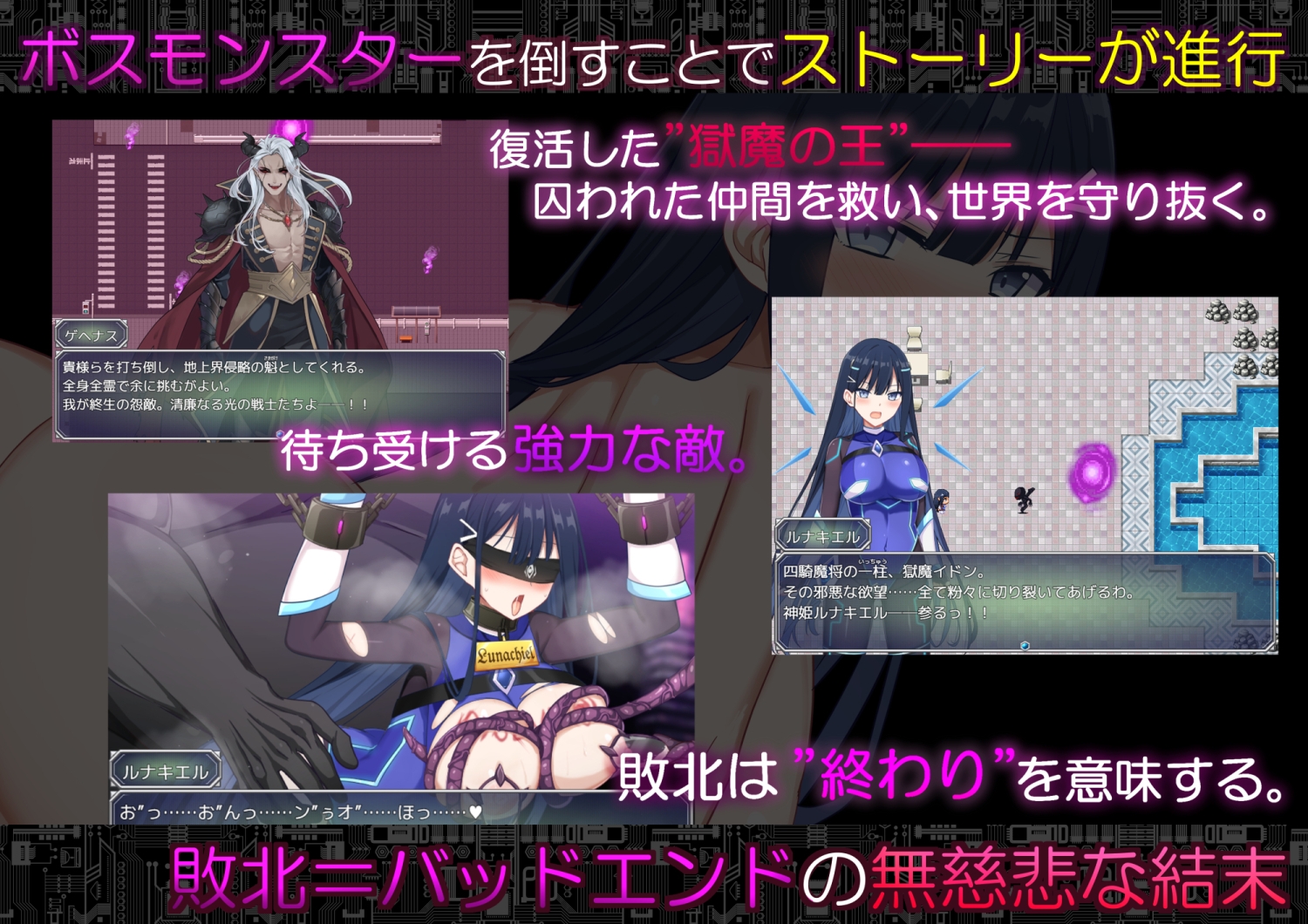
The genre tags translate into a fairly aggressive spread of kinks layered on top of the main NTR/corruption backbone — pregnancy and impregnation, lactation, big-breasted and pregnant-body art, mind control, interspecies encounters, and battle-integrated violation scenes where the heroines are broken down mid-fight rather than in a separate cutscene. Quality-of-life options are also unusually generous for the genre: an H-scene-unlock switch available from the start, an easy-mode toggle for trivializing trash mobs, and individual skip toggles for transformation sequences, H scenes, and skill cut-ins, so you can tune pacing to taste on repeat playthroughs.
What doesn’t
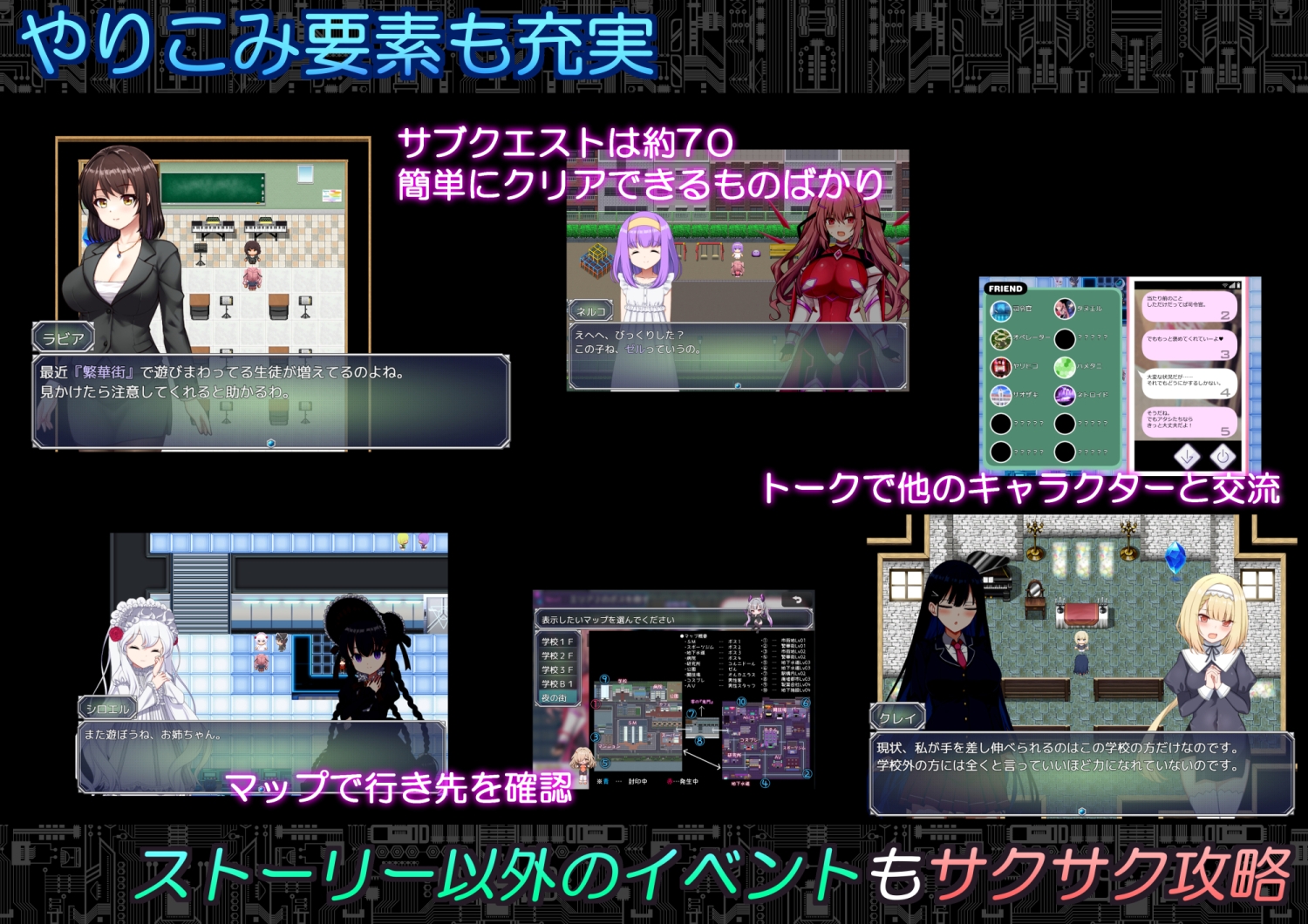
This runs on RPG Maker MZ, and nothing about the presentation tries to disguise that — combat and menus are the standard toolkit look, so whatever spectacle exists here is coming from the CG art and scenario, not the engine. The branching-ending system is also a double-edged sword: tracking affection versus corruption meters across three routes with multiple hidden bad ends is the kind of structure that rewards a guide or a wiki, and without one you may stumble into an ending you didn’t intend. A trial is available if you want to gauge the combat pacing and art before buying, but save data doesn’t carry over into the full release, so trial time doesn’t save you any replay effort later.
Who should buy this
This is Japanese-only with no official localization, and it’s worth being upfront about what that costs you. The turn-based RPG Maker combat and menu navigation are simple enough to muddle through on visuals and CG alone, so you won’t be lost mechanically. But the actual draw of a corruption/NTR game like this is watching a heroine’s affection and corruption meters shift and paying off in a specific ending — and that thread, along with the surrounding character dialogue and route-specific story beats, is delivered almost entirely through Japanese text. Without machine translation or a texthooker running alongside it, you can still enjoy the art, the transformation spectacle, and the H scenes themselves, but the emotional arc of the fall — the actual reason to care which ending you get — will mostly pass you by.
Verdict
As a corruption-and-NTR RPG that actually wires its H content into the progression system instead of tacking it on, this is an ambitious, well-stocked release — two full heroine routes, a combined third route, roughly 80 subquests, and a genuinely branching set of endings. It’s held back by a generic engine and a language wall that gates the story’s real payoff behind reading Japanese. 7/10 — a structurally ambitious dual-heroine corruption RPG that delivers if you can read it, or a decent art-and-scene showcase if you can’t.
This is the Japanese-language store. International credit cards and PayPal are accepted. The game itself is in Japanese.
Tip: If the DLsite page opens in Japanese, use the language selector at the top-right of the page (globe icon) to switch to English.